
ECG
- Diagnostic confirmation
- In-clinic snapshot

 CE Class IIa - FDA - TGA - MHRA cleared device
 Capture rhythm episodes over weeks to months, correlate symptoms with detected events, and support clinical decision-making, without adding operational complexity.


















FibriCheck works at every level of your clinical workflow. Start with your full cohort, drill into a patient, or review an individual trace, on your terms.
Look beyond a single patient. Use FibriCheck across your whole monitored population to track quality-related outcomes, follow detection yield over time, and evaluate how your clinical pathways perform. Continuous rhythm data becomes evidence you can report on and act on.
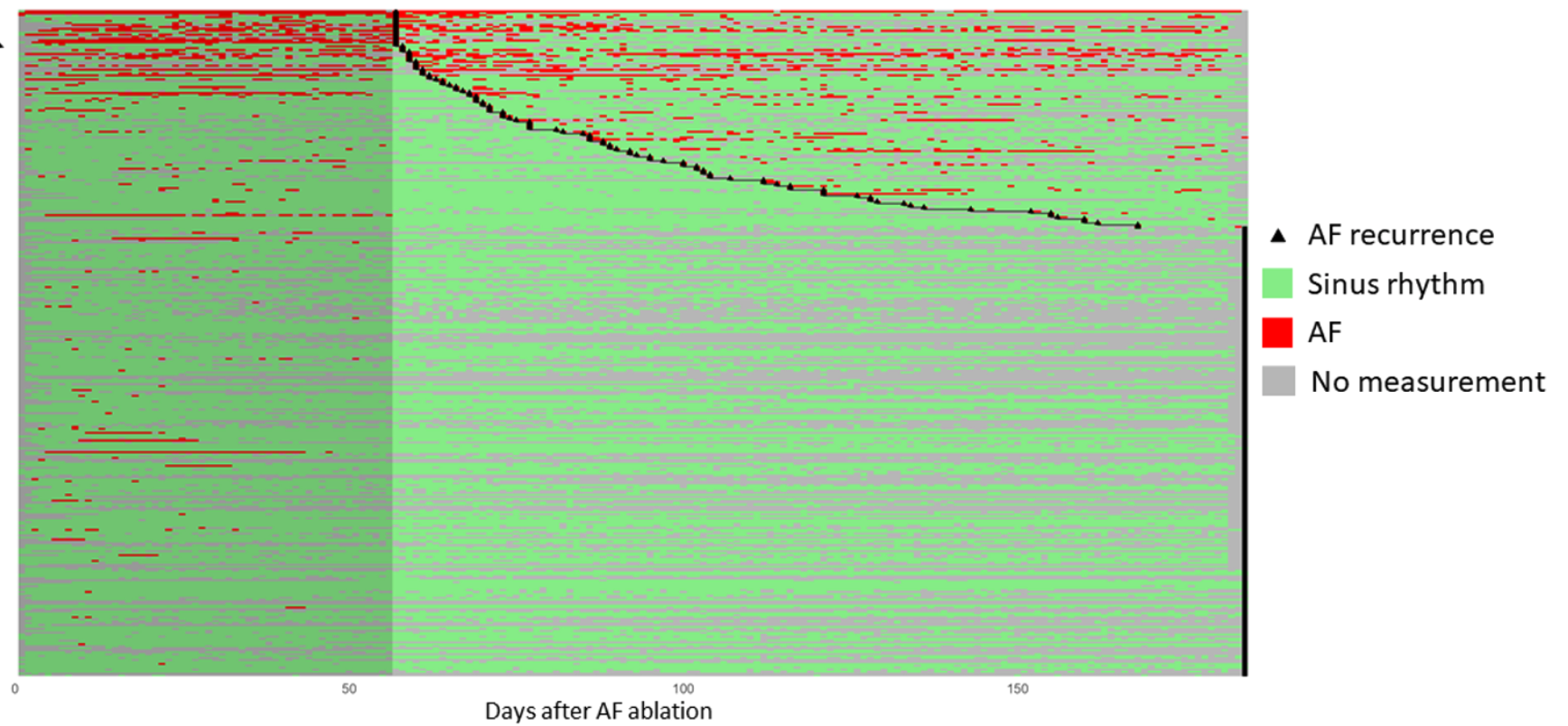
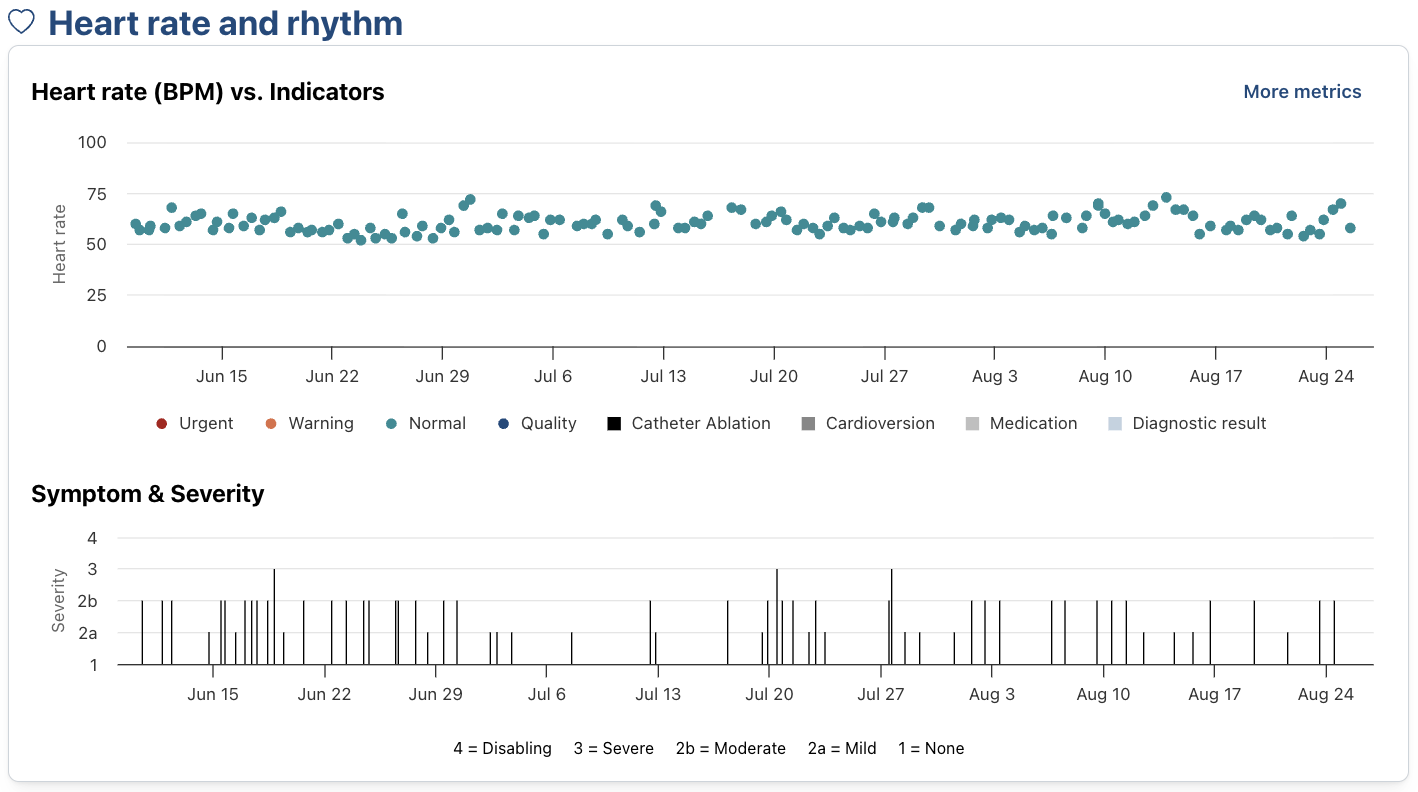
Evaluate every patient case with the data and insights that matter. See rhythm trends over weeks to months, heart rate and its variability, symptom correlation against measured episodes, and episode frequency and recurrence, all in one longitudinal view. Switch between three real patient patterns to see how each one reads in the provider portal.
Go all the way down to the raw signal. Every 60-second measurement keeps its full granularity, so you can review and evaluate the individual PPG traces yourself and keep your own interpretation capability alongside the algorithm's result. Drag to compare the ECG and PPG tracing for the same rhythm, then switch between examples. Try our ECG and PPG comparator.
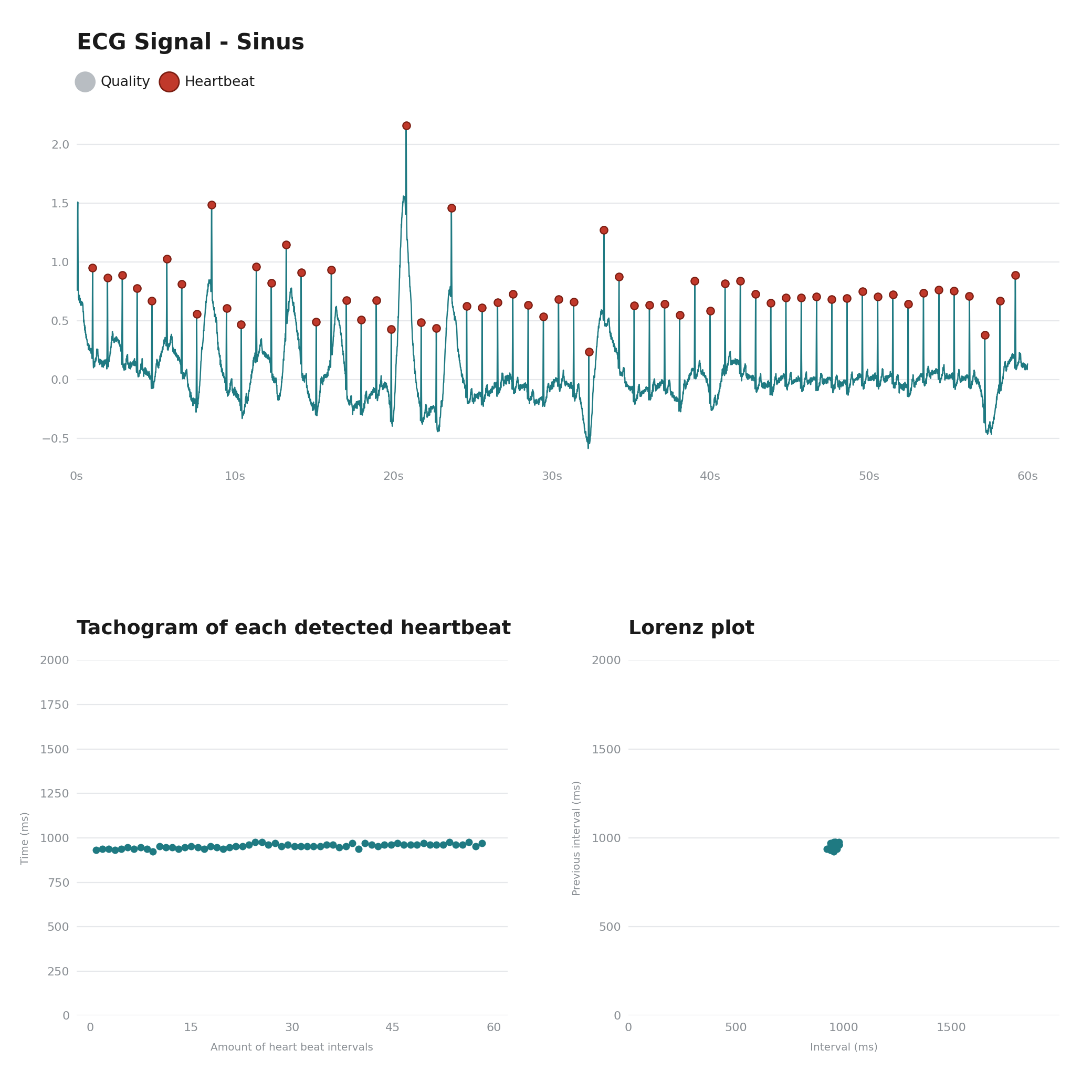
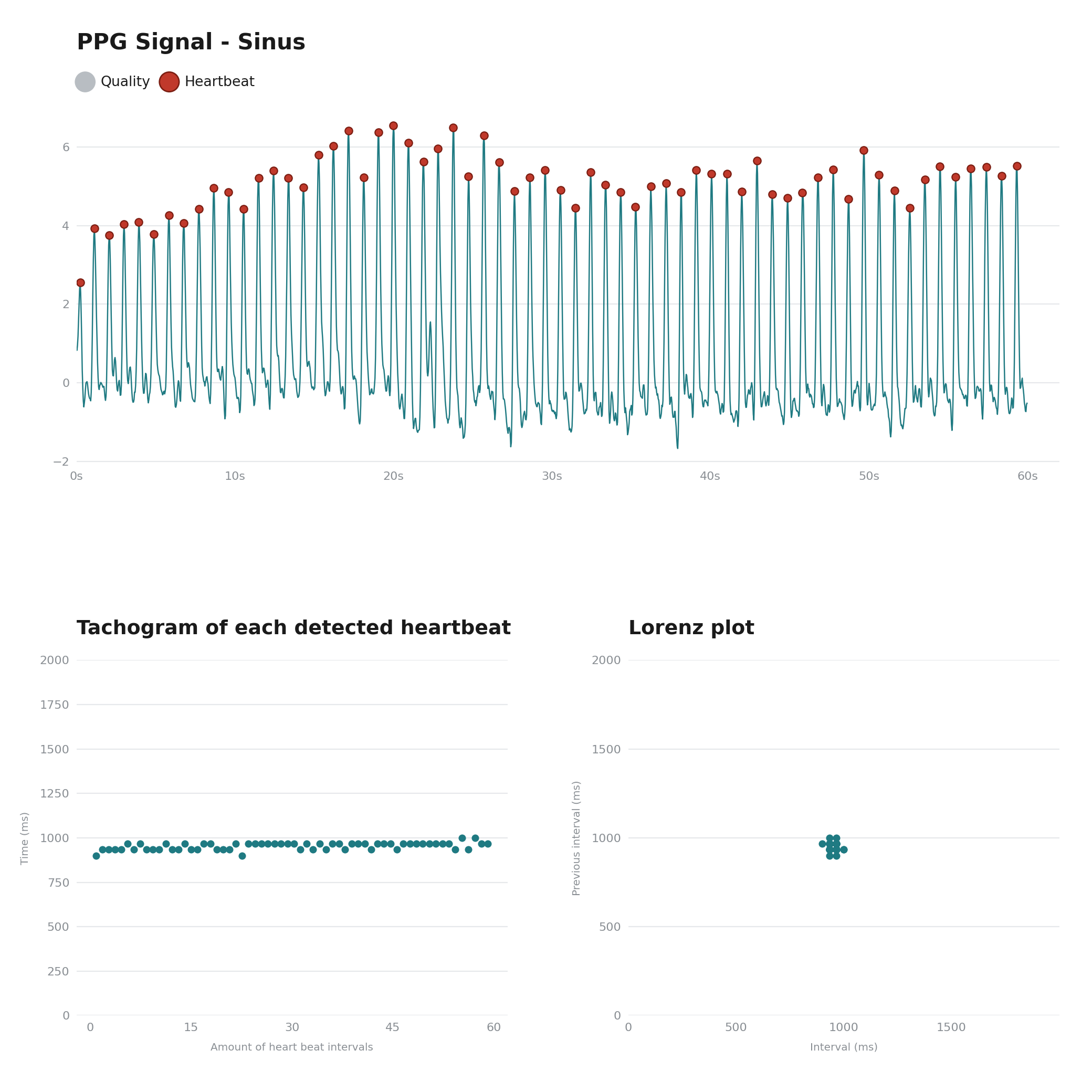 ECG PPG
 Designed for high-impact clinical use cases.
Enable large-scale AF screening across your at-risk population — patients with hypertension, post-cardiac surgery, or diabetes — using the smartphone they already own. No additional devices or hardware required.
Track procedure success and detect recurrence during the blanking period and beyond. Surface high-burden patients early to support timely clinical decision-making.
Provide continuous rhythm insights between clinic visits. Optimize treatment decisions for patients on antiarrhythmic or rate-control therapy — without adding operational complexity.
Structured rhythm monitoring for patients reporting palpitations, skipped beats, or unexplained cardiac symptoms. Correlate symptoms with rhythm data to confirm or rule out atrial fibrillation — reducing unnecessary ER visits, Holter orders, and in-person workups.
From a physician-controlled prescription to a data management platform that prioritises the most relevant findings based on your rules.
100+ peer-reviewed evidence for screening, monitoring, and post-intervention follow-up.
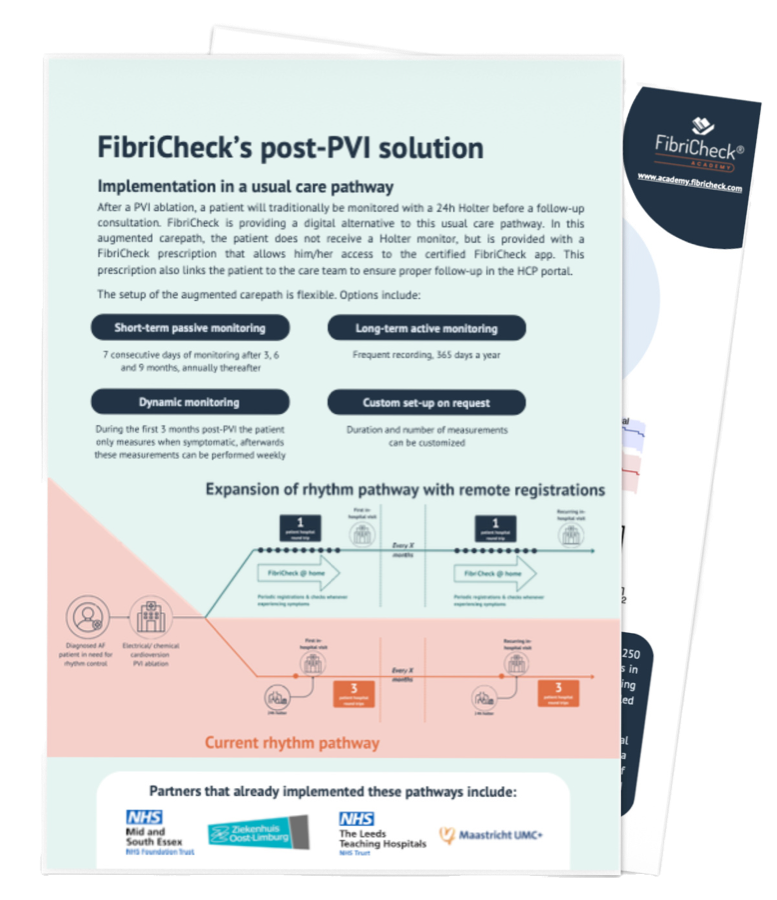
How structured, longitudinal rhythm monitoring supports follow-up after ablation. Fill in your details and we send the white paper to your inbox.
No. Patients measure with the smartphone they already own, using the phone's camera. There is no hardware to ship, configure, or retrieve, which is what makes the monitoring scalable across a whole practice.
You prescribe FibriCheck to a patient, set monitoring rules for frequency and escalation, and review findings in the provider portal. The platform prioritises the most relevant findings based on your rules, and structured, EHR-compatible reports support your documentation.
The workload is designed to stay small. Measurements are analysed automatically, your rules decide what surfaces, and your team reviews a prioritised worklist instead of every recording. You can always drill down to the raw PPG trace when you want to interpret a signal yourself.
Yes. FibriCheck is a regulated medical device backed by more than a decade of peer-reviewed research, including validation against ECG and randomized controlled trials. The full publication library is available in our Clinical Academy at academy.fibricheck.com.
Access is physician-controlled: your prescription unlocks the app for the patient and links them to your care team for follow-up. Pricing depends on your setup and market, including reimbursement options where applicable. We walk you through it in a demo.


